
Lawsuit Advertising Frenzy Fuels Georgia’s Litigation Epidemic
Law Firms Spent $168M+ on 2.2M Ads in Georgia
$1,200 ‘tort tax’ paid by Penn. residents annually
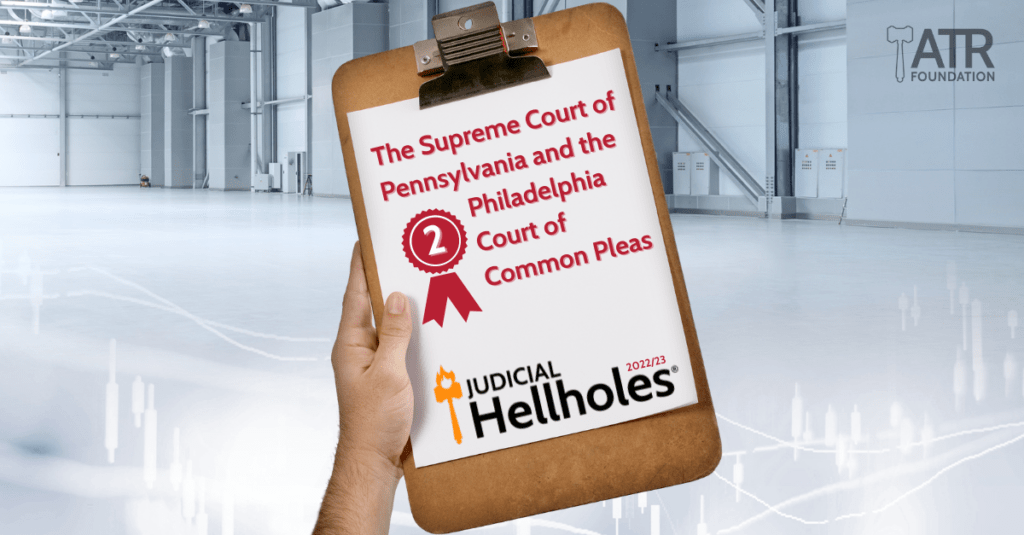
The Supreme Court of Pennsylvania and the Philadelphia Court of Common Pleas were named the second-worst “Judicial Hellhole®” in the country today, according to a new report from the American Tort Reform Foundation (ATRF).
“The Supreme Court of Pennsylvania encouraged forum shopping and expanded liability at every turn this year,” American Tort Reform Association President Tiger Joyce said.
ATRF cites the Supreme Court of Pennsylvania’s elimination of the state’s venue rule for medical liability lawsuits as its “most disappointing” decision in 2022.
“This decision will likely lead to a drastic increase in forum shopping and more medical liability cases being brought to plaintiff-friendly venues like Philadelphia’s Court of Common Pleas where juries are more willing to award high-dollar verdicts,” Joyce said. “Increased litigation costs mean doctors and hospitals will have to pay higher liability premiums which could lead to an access-to-care crisis as providers can’t afford to work in the area anymore.”
A blog post this year by one Pennsylvania trial lawyer went so far as to tout the importance and impact of being able to forum shop in the state. His post discusses how “venue shopping is a major component” of his decision making and that his goal is always to get his cases into Philadelphia’s Court of Common Pleas.
The report also says Pennsylvania is experiencing a surge in “nuclear verdicts” – awards that are greater than $10 million – most of which are coming out of the Philadelphia Court of Common Pleas.
“Businesses are on edge after product liability cases in recent years resulted in massive verdicts, including amounts as high as $120 million and $8 billion,” Joyce said.
“But these nuclear verdicts directly impact all Pennsylvanians – they lead to higher insurance rates, higher consumer goods costs, and fewer jobs.”
With inflation at an all-time high, Pennsylvania residents pay an annual “tort tax” of more than $1,200 per person while excessive tort costs result in 162,680 jobs lost each year across the state.
ATRF says the Philadelphia Court of Common Pleas Complex Litigation Center has become a prime location for trial lawyers to file mass tort litigation, particularly against pharmaceutical and medical device manufacturers.
“Thousands of out-of-state lawsuits are pending in Philadelphia’s Complex Litigation Center in cases against all sorts of product manufacturers,” Joyce said. “But Pennsylvania judges have made a habit of swinging open the courtroom doors to out-of-state plaintiffs and ignoring U.S. Supreme Court precedent on jurisdiction that would rein in these practices.”
The 21st edition of the annual report published by ATRF names eight Judicial Hellholes® in total, deemed the most unjust local courts and state civil justice systems in the country:
The full report is available at JudicialHellholes.org.
Law Firms Spent $168M+ on 2.2M Ads in Georgia
ATRA’s Latest Studies Reveal Financial Influence and Lack of Transparency in Pennsylvania’s Campaign Finance Systems
Two New Reports Analyze Legal Services Advertising Trends and Campaign Contributions
Two New Reports Unveil Disturbing Trends in Legal Services Advertising and Plaintiffs’ Firms’ Political Contributions
In-depth analysis unveils trial lawyers’ staggering advertising and political spending, exposing tactics used to shape public opinion and legal outcomes.
ATRA’s Latest Reports Reveal the Deep Ties Between Trial Lawyers and New York Politics